แสดงบทความที่มีป้ายกำกับ hollyday แสดงบทความทั้งหมด

วันเสาร์ที่ 10 พฤศจิกายน พ.ศ. 2550

Fitness programs: 5 steps to getting started

Fitness programs: 5 steps to getting started


Are you thinking about starting a fitness program? Good for you! You're only five steps away from a healthier lifestyle.

Starting a fitness program may be one of the best things you can do for your health. With your doctor's OK to exercise, physical activity can reduce your risk of chronic disease, improve your balance and coordination, help you lose weight — even improve your sleep habits and self-esteem. And there's more good news. You can do it in just five steps.

Step 1: Assess your fitness level

You probably have some idea of how fit you are. But assessing and recording baseline fitness scores can give you benchmarks against which to measure your progress. To assess your aerobic and muscular fitness, flexibility and body composition, consider recording:

  • Your pulse rate before and after a one-mile walk
  • How long it takes to walk one mile
  • How many push-ups you can do at a time
  • How far you can reach forward while seated on the floor with your legs in front of you
  • Your waist circumference at the level of your navel
  • Your body mass index

Step 2: Design your fitness program

It's easy to say that you'll exercise every day. But you'll need a plan — and no single plan is perfect for everyone. As you design your fitness program, keep these points in mind:

  • Consider your fitness goals. Are you starting a fitness program to help lose weight? Or do you have another motivation, such as preparing for a 5K race? Having clear goals can help you gauge your progress.
  • Think about your likes and dislikes. Choose activities you'll enjoy. If you have fun doing the exercises you've selected, you're more likely to keep doing them.
  • Plan a logical progression of activity. If you're just beginning to exercise, start cautiously and progress slowly. If you have an injury or a medical condition, consult your doctor or a physical therapist for help designing a fitness program that gradually improves your range of motion, strength and endurance.
  • Build activity into your daily routine. Finding time to exercise can be a challenge. To make it easier, schedule time to exercise as you would any other appointment. Plan to watch your favorite show while walking on the treadmill, or read while riding a stationary bike.
  • Think variety. Varying your activities (cross-training) can keep exercise boredom at bay. Cross-training also reduces the risk of injuring or overusing one specific muscle or joint. Plan to alternate among activities that emphasize different parts of your body, such as walking, swimming and strength training.
  • Allow time for recovery. Many people start exercising with frenzied zeal — working out too long or too intensely — and give up when their muscles and joints become sore or injured. Plan time between sessions for your body to rest and recover.
  • Put it on paper. A written plan may encourage you to stay on track.

Step 3: Assemble your equipment

You'll probably start with athletic shoes. Be sure to pick shoes designed for the activity you have in mind, as well as your foot type.

If you're planning to invest in exercise equipment, choose something that's practical, enjoyable and easy to use. You may want to try out certain types of equipment at a fitness center before investing in your own equipment. To stretch your exercise dollars, consider buying used equipment. Or get creative. Make your own weights by filling old socks with beans or pennies, or by partially filling a half-gallon milk jug with water or sand.

Step 4: Get started

Now you're ready for action.

  • Start slowly and build up gradually. Give yourself plenty of time to warm up and cool down with easy walking or gentle stretching. Then speed up to a pace you can continue for five to 10 minutes without getting overly tired. If you can't carry on a conversation while you exercise, you're probably pushing too hard. As your stamina improves, increase the amount of time you exercise by one to five minutes a session. Aim for at least 30 minutes of exercise most days of the week.
  • Break things up if you have to. You don't have to do all your exercise at one time. Shorter but more frequent sessions have aerobic benefits, too. Ten minutes of exercise three times a day may fit into your schedule better than a single 30-minute session.
  • Be creative. Maybe your workout routine includes various activities, such as walking, bicycling or rowing. But don't stop there. Take a weekend hike with your family or spend an evening ballroom dancing.
  • Listen to your body. If you feel pain, shortness of breath, dizziness or nausea, take a break. You may be pushing yourself too hard.
  • Be flexible. If you're not feeling good, give yourself permission to take a day or two off.

Step 5: Monitor your progress

Retake your personal fitness assessment six weeks after you start your program and then again every three to six months. You may notice that you need to increase the amount of time you exercise in order to continue improving. Or you may be pleasantly surprised to find that you're exercising just the right amount to meet your fitness goals.

If you lose motivation, set new goals or try a new activity. Exercising with a friend or taking a class at a fitness center may help, too.

Starting an exercise program is an important decision. But it doesn't have to be an overwhelming one. By planning carefully and pacing yourself, you can establish a healthy habit that lasts a lifetime.

Fitness link.


วันศุกร์ที่ 9 พฤศจิกายน พ.ศ. 2550

Why Do People Skydive?

Why Do People sky dive? by: Lori Steffen


Skydivers - Most people say we're crazy. Some say we have a death wish. Psychologists say people with an inclination to take high risks are a necessary part of the continuation of our species.

We are people from all walks of life. Students, blue-collar workers, engineers, doctors, nurses, you name it. What we have in common is an infinity for a high-risk sport, skydiving. Some also participate in other sports like scuba diving, kayaking, rock climbing, skiing. There is a sense of camaraderie among us. A sense that we understand a greater truth that is missed by most people.

Mentally it is an incredibly refreshing break from "society". Skydiving is a super stress reliever. When you are skydiving, you focus on that skydive and nothing else. This keeps away all the distractions of life. No room for stray thoughts or worries here. The intense focus and the pump of adrenaline leave you feeling mentally and physically cleansed.

And yes, the adrenaline is no doubt a part of it. Your body responds to the rush of adrenaline into it, bringing with it a sense of excitement and a surge of energy. Our human bodies are made to produce adrenaline as a survival mechanism and it is being regarded more and more as a necessary part of the human experience and overall health. Something any skydiver could have already told you a long time ago.

Stepping out the door of a flying airplane has other benefits too. It makes you mentally tough. It takes a lot of mind control to go against what you have been taught about danger since a child, get a hold of your thoughts, and realize that yes, it is okay to step out that door. You acquire an increased awareness of all that is around you. You develop a confidence in yourself and a quick response as events happen around you. The sense of accomplishment is incredible. Knowing you met your fear, took control, and pushed yourself to take that step flows over into other parts of your life.

When I did my first skydive a group of us from work went. I organized the outing. Everyone had a blast but I was the only person who did more than one jump. Later, in talking with one of the guys in the group he said to me - I know that whatever I face in life, I can remember that I went up in that plane and did a skydive. If I can summon the courage to do that, I can do anything. It was great.

Okay, so enough of the psychobabble mumbo jumbo. What is the sensation? When you step out the door of a flying airplane you are in freefall until the parachute is deployed. Most skydives are done from around 10,000 ft. to 14,000 ft. providing the skydiver anywhere from 30 seconds to 70 seconds of freefall time. Stick your arm out the window of a car doing 60 mph then imagine your whole body out there going twice as fast - then you start to get a little of the idea of what skydiving feels like.

No one I've ever talked to has been able to put into words the sensation of skydiving. Even asking first time jumpers - is there any way to describe what you just did - only elicits a wide-eyed, grinning, no way.

Freefall is such a stupendous sense of freedom. You are flying through the air, able to move your body in 3D. You can fly forward, back-up, move sideways, speed up how fast you are falling and slow down how fast you are falling. Yes, you are continually falling. But during that time you are definitely flying your body. You can do flips and twists. You can stand on your feet or stand on your head. There are absolutely no limits as to which direction you can move your body.

And let there be no doubt - there is not a plane around that can give you the same view. What an awesome sight to view 360 degrees around you - the sky, the horizon, the incredible beauty of the world, right there for you to see with no obstructions. To feel you are a part of that sky.

The parachute flies like a glider; responding to the pilot's input and slicing you through the sky. It can be flown slowly and smoothly or fast and wild. But either way, with correct pilot input, it would bring you safely and softly to landing on the earth.

Why do we skydive? Who will ever understand the beauty, the freedom, the rush but someone who has been there? Truly, the sky is our playground.

วันอังคารที่ 6 พฤศจิกายน พ.ศ. 2550

Learn How to Play Piano

Learn How to Play Piano
by: Nick Krueger
-------------------------


Some people are more musically inclined than others, but that doesn’t mean you cannot learn how to play the piano. Many tricks of the trade exist that can have you playing the piano within a couple of months of practice, and some online courses even claim to help you learn much faster. No matter what is claimed or what is available, the most important aspect of learning how to play any new instrument, hobby, or art form is dedication and practice.


Listening to Beethoven, Mozart, or any other genius composers might make you want to sign up with the best instructor you can find. Your aim might be to enthrall others with the beauty of classical, modern, or even jazz piano playing. Many adults who learn how to play the piano choose to do so through rigorous methodologies of learning the fundamentals of music first. This requires dedication and lots of practice, not to mention the cost of an instructor.

For other learners who want to give the piano a try, quicker methods won’t mean you will enjoy playing the piano any less. It simply means you will not have the fundamental base that someone else has learned over a longer period. One of these quicker methods, both on and offline, involve the learning of chords. In an evening, someone who knows nothing about the piano might have the ability to play a melody just on chords alone. Playing by chords is usually encouraged more than playing by tablature. And, there are no problems with those who first learn chords then learn to read music later on.

Any piano melody is made up of its smallest parts – its notes. Those who learn chords do not actually learn these ‘smallest’ pieces, but instead learn how to break the music into chunks. By dealing with songs one chunk at a time and matching what is heard, many piano players enjoy greater freedom of creativity as they progress.

One who learns how to play the piano using chords does it more so through trial and error. This person may not actually be able to read musical notations or scores, but he or she will at least be able to judge what chord is played and for how long. As the tune or melody is practiced, usually by breaking a song up into its basic elements and listening to it as it is being played, the person matches what he or she is hearing.

A player who learns how to play the piano by ear will not necessarily be able to judge if a key is sharp or flat, and that’s where having some basic knowledge of the notes comes in handy. If you need to stay in key F-major, for example, then you will know how to keep that note flat during the entire scale. While flat keys and sharp keys follow similar patterns, learning how to play the piano is not based on this alone. For teenagers or adults who are inspired and self-motivated enough to pursue their goals, learning how to play the piano can be done within a short amount of time.

Technorati Profile

Planning A Fishing Vacation For The Whole Family

Planning A Fishing Vacation For
The Whole Family
==============


The ideal vacation for many is hopping on a plane or driving cross-country. The person does not have to go far to have fun since family bonding can be accomplished by planning a fishing trip.

The individual can look in the Internet to check out some fishing cabins or contact those that are in the phone directory. It is not enough to just ask how much it costs. It is important to ask some other details to make the trip a memorable experience.


Here are some of the questions worth asking lodge owner about.

1. When is it best to go fishing? Some people will say this can be done at any time perhaps to make money. It is best to call those who live near the lake itself because these people will be able to tell when is the best time to go to the lake.

2. This might be the first time that the family is going to the lake. It will be a good idea to ask if there is a guide that will be able to direct the people to the best fishing site. Those that don't should be able to tell where to go on the map.

3. Most fish are in the deeper portion of the lake. The only way to get there will be by riding on a boat so its best to check the conditions of the rental fleet. If this is well equipped, then the person doesn't need to buy additional accessories.

4. The family might forget some things that are needed for the trip. The individual should ask if there is a store nearby to purchase these items and also to replenish those that were used up. This will save time in going back to town allowing everyone to spend more time in the lake.

5. It will also be good to ask the proximity of the nearest medical facility. This will be important if a member of the family gets injured in an accident.

6. Some fishing lodges advertise a certain amount for a few days by the lake. It is advisable to ask if there are any hidden charges. An honest owner will be able to give an answer since this information is helpful in determining whether to do it here or have this done in another venue.

If the individual has found a suitable place for the fishing vacation, it is time to pack. There may not be enough beds so it is best to bring a few sleeping bags. The person should also bring some food, soap, towels and other items just in case the place where the family is staying in doesn't have these things.

It is also advisable to bring a flashlight just in case someone needs to go back to the car.

If the individual does not have a fishing license, it will be a good idea to apply for one. This will save the trouble of paying for penalties in case there were some regulations that were violated.

Some people think that the lodge owner can help in getting these documents when in fact it is not. The applicant must apply for this in person and present the proper documents before someone from the fishing and gaming commission will issue the license.

During this time, the individual must already know all the rules and regulations of the state and comply with it. This will avoid getting into any trouble especially for those who have never gone on a fishing vacation.

The fishing vacation for the whole family must be planned months in advance. This will give enough time to canvass around and do some homework before driving off to the desired destination.

If the family was able to enjoy this trip, this can be done again in the future. Everyone can decide to stay in the same place or try another venue since there are more than 10,000 fishing lodges all over the United States.

There are those who may see a fishing trip as an ideal vacation. Those who have never done it should keep an open mind because this could a family tradition when the people get to enjoy it.

วันอาทิตย์ที่ 4 พฤศจิกายน พ.ศ. 2550

What you need to know before you begin playing chess.

What You Need to Know BEFORE You Begin Playing Chess. by: James Wilson
-------------------------------------------------------------------------------------------------------


As a chess player, you lose games from time to time—like all chess players.

Naturally you want to improve your play. Is there something special or unique about your problem? I don't think so. Only a few of us can become masters; yet the rest of us can achieve respectable playing strength with a reasonable amount of application.
The first big step—an enormous step—in improving our play is to become aware of the things we do wrong, the bad moves we make. Many of us could never reach that point without personal lessons because we could not previously find in books the kind of material that would enable us to spot our own weaknesses.

That is a pity, for while chess is a lot of fun, win or lose, it's more fun when you win! In my contacts with thousands of chess players for over twenty years, I have often watched them grope and drift and become discouraged in their efforts to improve their game.

It was from these observations that the notion of concentrating on the Eight Bad Moves took shape. Again and again I have seen, in the course of teaching and playing and discussing, that most players commit certain typical errors.

1 started to think about these errors and how to describe them in such a way that the reader would exclaim, "At last! That's just why my games go wrong! If only I'd realized this sooner!"

This book has been "on my mind" for several years. What held me back somewhat in writing it, was the influence of the teachers and psychologists who have been insisting that a "negative" approach is all wrong. I finally concluded that my emphasis on the Eight Bad Moves was not really negative at all. Before a player can begin to improve, he must clear away the faults that have been spoiling his games and depriving him of well-earned victories.

In your study of these games and ideas you will not only discover the Eight Bad Moves and how to overcome the faults that produce them, you will also encounter a wealth of new ideas and techniques which you will enjoy using in your own games.

To derive the maximum value from this book, there are two features which you will very likely want to review quickly. One is to check up on the relative values of the chessmen. Expressed in points, their values are as follows:

Queen: 9 points
Rook: 5 points
Bishop: 3 points
Knight: 3 points

Pawn: 1 point

It is important to be absolutely certain of these values, for most games are decided by superiority in force.

Bishops (3 points) and Knights (3 points) are equal in value, but experienced players try to capture a Bishop in return for a Knight.

A Bishop or Knight (3 points) is worth about three Pawns (3 points). If you give up a Knight and get three Pawns in return, you may consider it as more or less an even exchange. If you lose a Knight (3 points) for only a Pawn (1 point), you have lost material and should lose the game, if you are playing against an expert.

If you capture a Rook (5 points) for a Bishop or Knight (3 points), you are said to have "won the Exchange." If you lose a Rook (5 points) for a Bishop or Knight (3 points), you have "lost the Exchange." The other important feature in reading a chess book is to be familiar with chess notation. If you can count up to 8, this presents no problem. You may have heard scare stories to the effect that chess notation is inordinately difficult. This difficulty of chess notation is a myth, circulated by people too lazy to discover how simple and logical it really is.

Although the compact treatment of games and examples makes only slight demands on your knowledge of chess notation, I should like to advise you to master the notation thoroughly; it will open the gates to a lifetime of reading pleasure.

The following are the chief abbreviations used in the chess notation:

King — K Queen — Q Rook — R Bishop — B Knight — N Pawn — P to — — check — ch captures — x discovered check — dis ch double check — dbl ch en passant — e.p. castles, king-side — 0—0 castles, queen-side — 0—0—0 good move — ! very good move — ! ! outstanding move — ! ! ! bad move — ?

Here are some examples of abbreviation: N—KB3 mean's "Knight moves to King Bishop three." Q x B means "Queen takes Bishop." R—K8 ch means "Rook moves to King eight giving check."

Want tons of proven chess tips, techniques & tactics that you can start using today?...


How to Build A Bird House

How To Build A Bird House


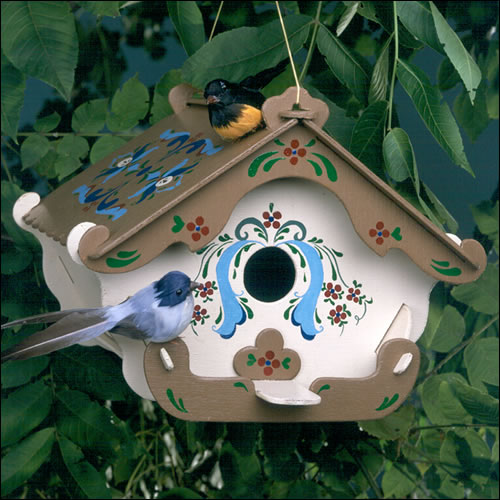
If you enjoy spending time around birds then you may want to build a birdhouse. Building a birdhouse is a great way to become a companion of birds. Birdhouses add attractiveness to any landscape. Crafting, designing and building birdhouses is a in-expensive hobby.


You need to construct a birdhouse that is easy to clean. It should be sturdy, cool, and rainproof as well. Remember, this is your birdhouse, so use your imagination; you will have something unique and all your own when your project is completed..

It is important not to use metal to build your birdhouse, not even nails; use non-toxic outdoor wood glue. Metal can become very hot when the sun is beating down on it, plus it can have very sharp edges. Wood is the best material to build a birdhouse. To keep water out of the entrance of the birdhouse you need the roof to pitch enough to shed water.

Add a couple small holes near the top of the birdhouse for ventilation on hot days. The bottom of the birdhouse should be constructed with screws, so it will be easy to take apart when you clean it.

When your bird house is built it is time to mount it. When mounting your birdhouse it is important to keep in mind predators, such as squirrels, cats and snakes. Place your bird house mount out of the range of jumping and climbing animals. The best mount for a birdhouse is PVC pipe which can be purchased inexpensively at your local home hardware supply store. Get an 8' long piece of PVC that is 3 or 4" in diameter. Also be sure and buy a "flange" that will fit into the PVC. When looking at a 'flange' from the side it has the shape of a man's dress hat, as one would also look at the dress hat from from it's side view. The round part of the 'hat' - or 'flange' slips down, about 2" into one end of the PVC pipe. The flat part of the 'hat' - or 'flange' should have a small hole pre-drilled in each corner. A large, approx. 12" x 12" piece of plywood is attached, to the flat part of the 'hat' or 'flange' with screws via the pre-drilled holes. Be sure this is placed in the middle of the 12" x 12 plywood. This will serve as your birdhouse base. Now turn this over and simply slide the round part of the 'hat' - or 'flange' into the end of your PVC pipe. On top of this securely mount your bird house. When you have moved your PVC to an upright mounting position, you would be looking upward, and see the screws that attached flange to your 12" x 12" base.

Now it's time to mount your bird house. Dig about an 18" hole and drop it in! Be sure and pack the dirt solidly back around the base to secure it. For added security you could pick up an inexpensive bag of ready mix cement. Just mix it with water, set the PVC in the middle of the hole and pour the cement evenly around it. It is a good idea if you could put your hands on a level to make sure your PVC stays vertically straight while working. That's all there is to it!

When you are ready to clean your bird house simple unscrew the 12" x 12" base mounting screws, slide off the base with it's attached birdhouse and clean it! When cleaned, replace the 12" x 12" base and reinsert your screws. Now wasn't that easy!